From ancient caves to modern freezers, humanity has always sought ways to extend the life of our food. What began as a primal necessity to survive lean times has evolved into a fascinating science and an art form. Join us on a journey through the history and science behind some of the most ingenious food preservation techniques: canning, pickling, and freeze-drying.
The Dawn of Preservation: A Battle Against Spoilage
Before refrigerators and supermarkets, every season brought a feast or a famine. Early humans quickly learned that fresh food didn’t last, falling victim to the invisible forces of microbes – bacteria, yeasts, and molds – that thrive on moisture and nutrients. The earliest forms of preservation were simple yet effective: drying in the sun, salting meats, and storing root vegetables in cool, dark cellars. These methods reduced moisture, created hostile environments, or slowed metabolic processes, all aiming to outsmart spoilage.
Canning: A Sealed Revolution
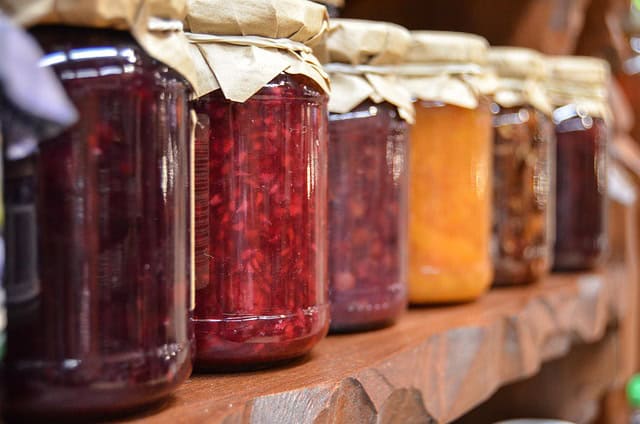
The late 18th century saw a breakthrough, spurred by Napoleon Bonaparte’s need to feed his armies on long campaigns. He offered a prize for an effective food preservation method, which was eventually claimed by Nicolas Appert, a French confectioner. Appert’s method involved placing food in glass bottles, sealing them, and then heating them in boiling water. He didn’t fully understand why it worked, but he observed that the heat prevented spoilage.
It wasn’t until Louis Pasteur in the mid-19th century that the science behind Appert’s technique became clear: heat kills microorganisms, and a vacuum-sealed container prevents new ones from entering. This process, now known as canning, revolutionized food supply chains and made diverse diets possible year-round, even in remote areas.
The Science of Canning:
- Heat Treatment: Foods are heated to a specific temperature for a set time (often in a boiling water bath for high-acid foods or a pressure canner for low-acid foods). This destroys spoilage microorganisms and inactivates enzymes that can cause food degradation.
- Vacuum Seal: As the jars cool after heating, the air inside contracts, creating a vacuum that pulls the lid down, forming an airtight seal. This seal is crucial for preventing recontamination.
Canning remains a beloved home preservation method, allowing us to capture the peak freshness of summer tomatoes or crunchy pickles for the winter months.
Pickling: The Power of Acid and Fermentation
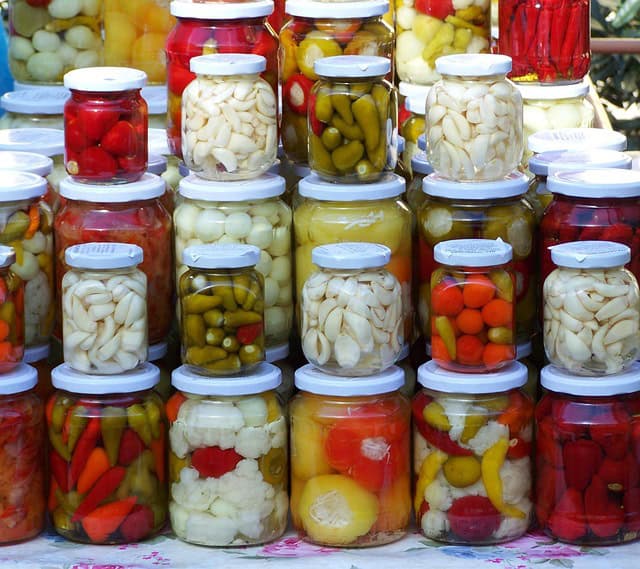
Pickling is perhaps one of the oldest and most diverse preservation methods, with roots in ancient Mesopotamia. It involves submerging food, usually vegetables, in an acidic solution, typically vinegar or a brine that encourages lacto-fermentation.
Two Main Types of Pickling:
- Quick Pickling (Vinegar Pickling):
This method uses an acidic solution (vinegar, water, salt, sugar, and spices) to quickly inhibit microbial growth. The high acidity creates an environment where most spoilage bacteria cannot survive. While tasty, these pickles often require refrigeration and have a shorter shelf life than fermented pickles.
- Fermented Pickling (Lacto-Fermentation):
This is a more traditional and fascinating method. Foods are submerged in a saltwater brine, which creates an anaerobic (oxygen-free) environment. Naturally occurring Lactobacillus bacteria, present on the surface of most vegetables, begin to convert the sugars in the food into lactic acid. This lactic acid acts as a natural preservative, lowering the pH and inhibiting spoilage organisms, while also imparting a distinctive tangy flavor and often enhancing nutritional value through the creation of beneficial probiotics. Think traditional dill pickles, sauerkraut, and kimchi.
The tangy crunch of a pickled cucumber or the pungent kick of kimchi speaks to a long history of harnessing beneficial microbes to transform and preserve food.
Freeze-Drying: The Modern Marvel
While sun-drying is ancient, freeze-drying is a relatively modern and highly sophisticated preservation technique developed during World War II for preserving blood plasma and penicillin. Its application to food took off with the space race, providing lightweight, nutritious meals for astronauts.
The Science of Freeze-Drying (Lyophilization):
Freeze-drying works by removing almost all moisture from food, but unlike traditional drying, it does so by sublimating ice directly into water vapor, bypassing the liquid phase.
- Freezing:
The food is first frozen to very low temperatures, typically -40°C (-40°F), turning all its water into ice.
- Vacuum Application:
The frozen food is then placed in a vacuum chamber. The reduced pressure allows the ice to sublimate – turn directly into vapor without melting.
- Gentle Heat (Desorption):
A small amount of gentle heat is applied to help the remaining bound water molecules escape.
The result is a highly porous, lightweight product that retains its original shape, flavor, color, and an impressive amount of its nutritional value. When rehydrated, freeze-dried food often springs back to a texture remarkably close to fresh. Think of those crunchy astronaut ice cream treats, or the robust flavor of freeze-dried coffee granules.